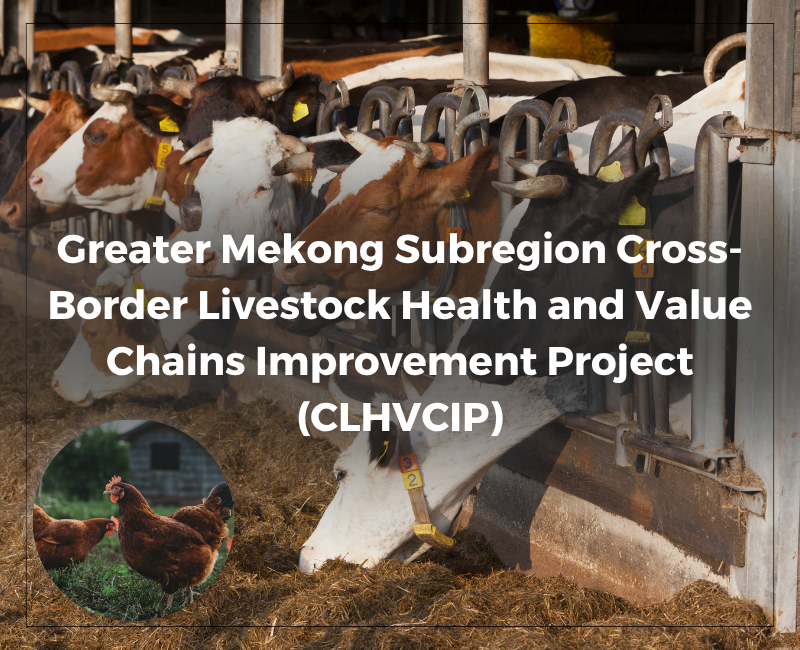
Greater Mekong Subregion Cross-Border Livestock Health and Value Chains Improvement Project (CLHVCIP)
| Objective/Goal (Overall): | The project aims to strengthen livestock health, food safety, and livestock value chain performance in Lao PDR while facilitating regional trade through improved animal health systems, digital transformation, and institutional capacity development. |
| Project period: | 9 July 2026 – 8 July 2029 |
| Funding agency: | Asian Development Bank (ADB) |
| Implementing agencies: | Department of Livestock and Fisheries (DLF), Ministry of Agriculture and Environment (MAE), Lao PDR, in partnership with IDRG Consultancy Services (India), Projects Consultant Sole Co., Ltd. (Lao PDR), and Asia Pacific Association of Agricultural Research Institutions (Thailand) |
| Countries in Focus: | Lao PDR |
Project Summary
The Greater Mekong Subregion Cross-Border Livestock Health and Value Chains Improvement Project (CLHVCIP) is an Asian Development Bank (ADB)-funded initiative supporting the Government of the Lao People’s Democratic Republic (Lao PDR) to strengthen the livestock sector and facilitate safe regional livestock trade. The project aims to improve animal health, food safety, livestock productivity, and value chain performance while enabling Lao PDR to become a leading supplier of safe and environmentally friendly livestock products within the Greater Mekong Subregion.
A central feature of the project is the phased development of a National Livestock Identification and Traceability System (LITS), initially covering cattle and buffalo in Disease Control Zones before expanding to project provinces and eventually nationwide. The project also develops complementary digital systems, including the Animal Production and Health Information System (APHIS), Laboratory Information Management System (LIMS), and mobile-based information and e-learning applications. These systems are designed in accordance with international standards, including those of the World Organisation for Animal Health (WOAH), to strengthen disease surveillance, livestock certification, traceability, and evidence-based decision-making.
APAARI’s Role in the Project
APAARI is a Joint Venture partner in the ADB-funded Greater Mekong Subregion Cross-Border Livestock Health and Value Chains Improvement Project (CLHVCIP), implemented in partnership with IDRG Consultancy Services (Lead Firm) and Projects Consultant Sole Co., Ltd. Under the Critical Skills Development and Policy Support (CS02) consultancy, APAARI contributes technical expertise as part of the multidisciplinary consulting team supporting the Government of Lao PDR in strengthening livestock health systems, digital livestock information systems, institutional capacity, policy frameworks, and livestock value chain development.
Project Activities
Output 1. Livestock health and value chain infrastructure expanded and upgraded in a climate-friendly manner.
Key activities under output 1 include:
- Establishing a livestock Disease Control Zone (DCZ) and associated quarantine facilities and monitoring systems across northern Lao PDR;
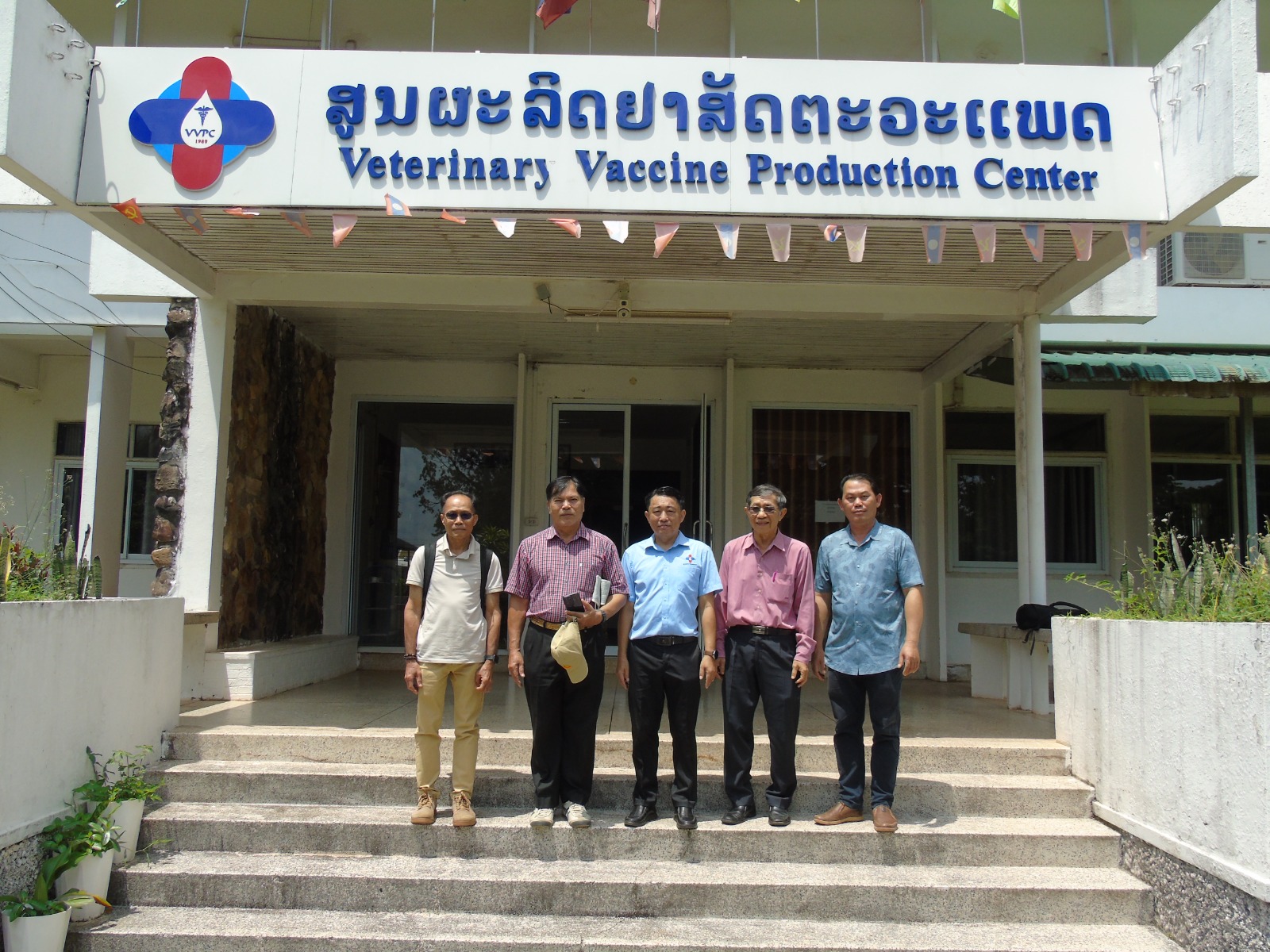
- Upgrading infrastructure for cattle breed improvement (National Cattle Breeding Center – NCBC), vaccine production, and quality control laboratories; and
- Improving livestock value chain infrastructure
Output 2: Capacity for improved production and health of livestock and livestock products strengthened.
Output 2 will establish three initiatives:
- A livestock epidemiology and animal health informatics program,
- A livestock production services program, and
- A livestock product quality control and certification program
Output 3: Enabling policies for better supply, health, safety and trade in livestock and livestock products enhanced.
Key activities under output 3 will include support for
- Cross-border livestock trade policies
- Regulations and standards
- Private sector development
Project Resource
Dr. Ravi Khetarpal
ravi.khetarpal@apaari.org
Mr. Manish Rai
manish.rai@apaari.org
Dr. Phanthavong Vongsamphan (Deputy Director General, DLF)
Mr. Thongkhoun Khonglaliane