From municipal composting sites to digital food-waste tracking systems, a new APAARI-led initiative is helping Thailand and Cambodia turn food loss into measurable climate action.
Across Southeast Asia, nearly half of what is grown never reaches a plate. A new regional initiative led by APAARI is working to change that not through grand proclamations, but through composting sheds in Cambodian towns, digital dashboards in Thai markets, and the quiet persistence of front line workers who refuse to let good food go to waste.
By the APAARI Communications Team | May 2026 | Bangkok, Thailand
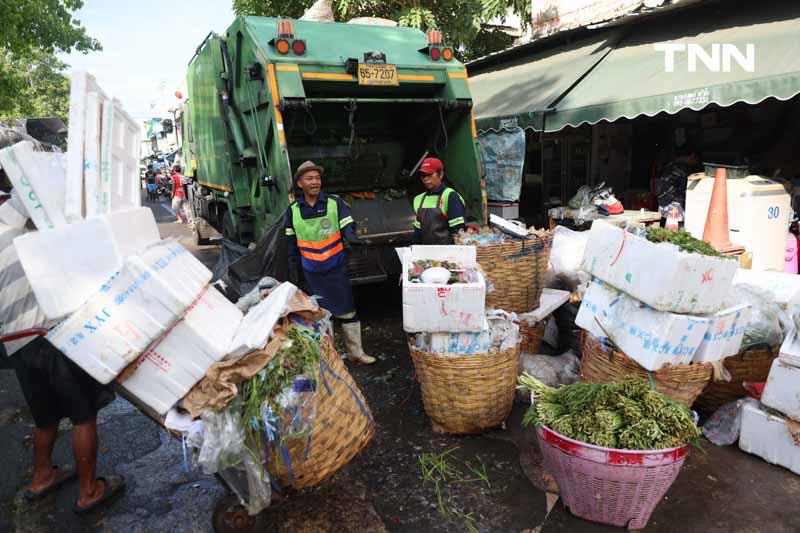
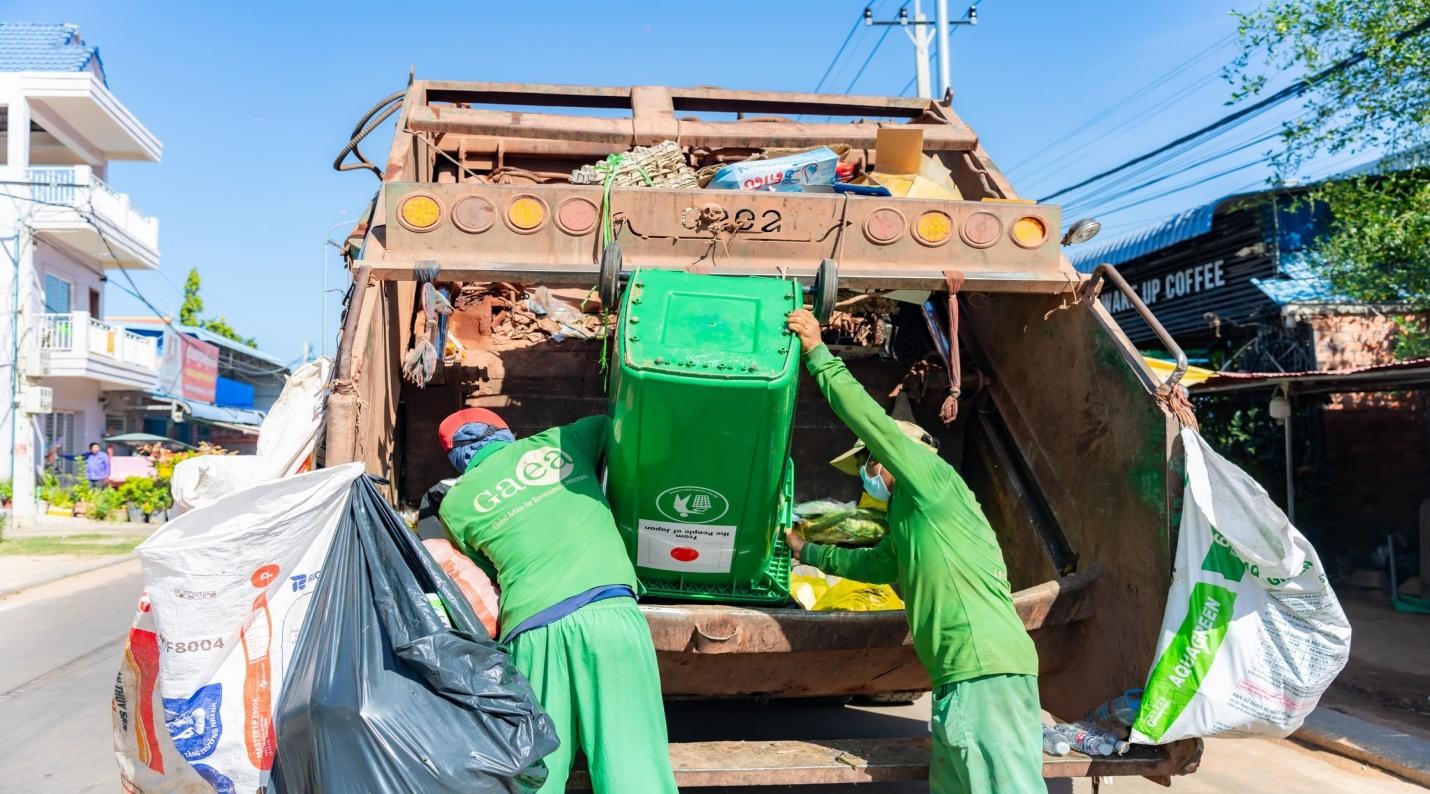
Walk through any fresh market in Bangkok at six in the morning, and you will find stalls overflowing with mangoes, morning glory, and jasmine rice. By noon, the scene shifts. Bruised fruit piles up beside drainage channels. Unsold fish sits in warming ice. Bags of wilted greens are tossed, without ceremony, into the municipal skip. By the time the trucks arrive after dark, a single medium-sized market in the Thai capital can produce upward of two tonnes of organic waste in a day.
Now multiply that across six countries, tens of thousands of markets, millions of kitchens, and three harvests a year. The number you arrive at is staggering: Asia-Pacific produces more than 300 million tonnes of food loss and waste annually over half the global total. The resulting methane emissions alone account for 8 to 10 per cent of global greenhouse gases, roughly equivalent to the entire aviation industry.
These are not abstract figures. They represent lost calories that could feed hundreds of millions of food-insecure people. They represent smallholder farmers in Cambodia who watch 16 to 20 per cent of their harvest rot before it ever reaches a buyer. And they represent municipal governments across the region struggling with overflowing landfills, limited budgets, and no clear plan to separate the organic fraction from everything else.
A Problem Hidden in Plain Sight
Thailand generates approximately 9.7 million tonnes of food waste each year roughly 64 per cent of all household waste in the country. Most of it ends up in landfills, where it decomposes anaerobically and releases methane and nitrous oxide. The Pollution Control Department (PCD), with support from GIZ’s Thai-German Climate Programme on Waste (TGCP-Waste), produced a national Food Waste Roadmap between 2019 and 2024. It was a solid piece of policy work, widely praised. But the Roadmap stopped at the municipal doorstep. Implementation the hard, unglamorous work of actually building composting infrastructure, training waste collectors, installing weighing systems, and changing household behaviour remained largely unfunded.
In Cambodia, the challenge wears a different face. Organic waste accounts for 60 to 70 per cent of urban municipal solid waste in cities like Phnom Penh and Siem Reap, but baseline data is fragmented and often unreliable. Rural-to-urban logistics gaps mean that post-harvest losses for staple crops like rice and vegetables run between 16 and 20 per cent. The ASEAN Municipal Solid Waste Management Enhancement programme (AMUSE), also supported by GIZ, piloted a model-city approach in Siem Reap and demonstrated that municipal-level source segregation is feasible but the pilot focused on the waste stream as a whole, not specifically on the food and organic fraction where the climate impact is greatest.
From Awareness to Action: What the New Initiative Looks Like
It was against this backdrop that APAARI the Asia-Pacific Association of Agricultural Research Institutions began pulling together a different kind of response. Rather than writing another regional strategy document, the team asked a blunter question: what would it take to actually reduce food waste at specific sites, measure the climate impact with rigour, and build the institutional memory so that governments can continue the work after the project money runs out?
The answer took the form of a 36-month initiative, developed in close consultation with GIZ Thailand, the Pollution Control Department, Cambodia’s Ministry of Environment, Kasetsart University, and the Royal University of Agriculture in Phnom Penh. The project covers six pilot cities Yasothon, Nan, and Bangkok in Thailand, and Siem Reap, Phnom Penh, and Battambang in Cambodia and is anchored in APAARI’s Community of Practice on Food Loss and Waste, known as FLAW-CoP, which was formally launched in May 2025.
The word that comes up most in conversations with the project team is not ‘innovation’ or ‘disruption’ it is ‘additive.’ The initiative was designed from the outset to extend what GIZ has already built, not to duplicate it. Where TGCP-Waste produced the policy roadmap, this project funds the municipal-level implementation. Where AMUSE built model-city capacity for general waste, this project adds the food-and-organic-waste layer. Where Cambodia’s Climate Change Alliance developed NDC reporting frameworks, this project feeds in verified food-waste mitigation data.
Baselines First, Campaigns Second
Component 1 of the project, covering awareness and baseline data, reflects a lesson that the team learned the hard way from earlier food waste campaigns in the region: awareness without data is just noise. Before any social media post is designed or any billboard goes up, the project will conduct two rigorous national baseline assessments one in Thailand, one in Cambodia using the FAO/WRI Food Loss and Waste Accounting and Reporting Standard. The assessments will identify where in the value chain the greatest losses occur (the “hotspots”), which institutional gaps are blocking progress, and what data already exists in government systems that can be built upon rather than duplicated.
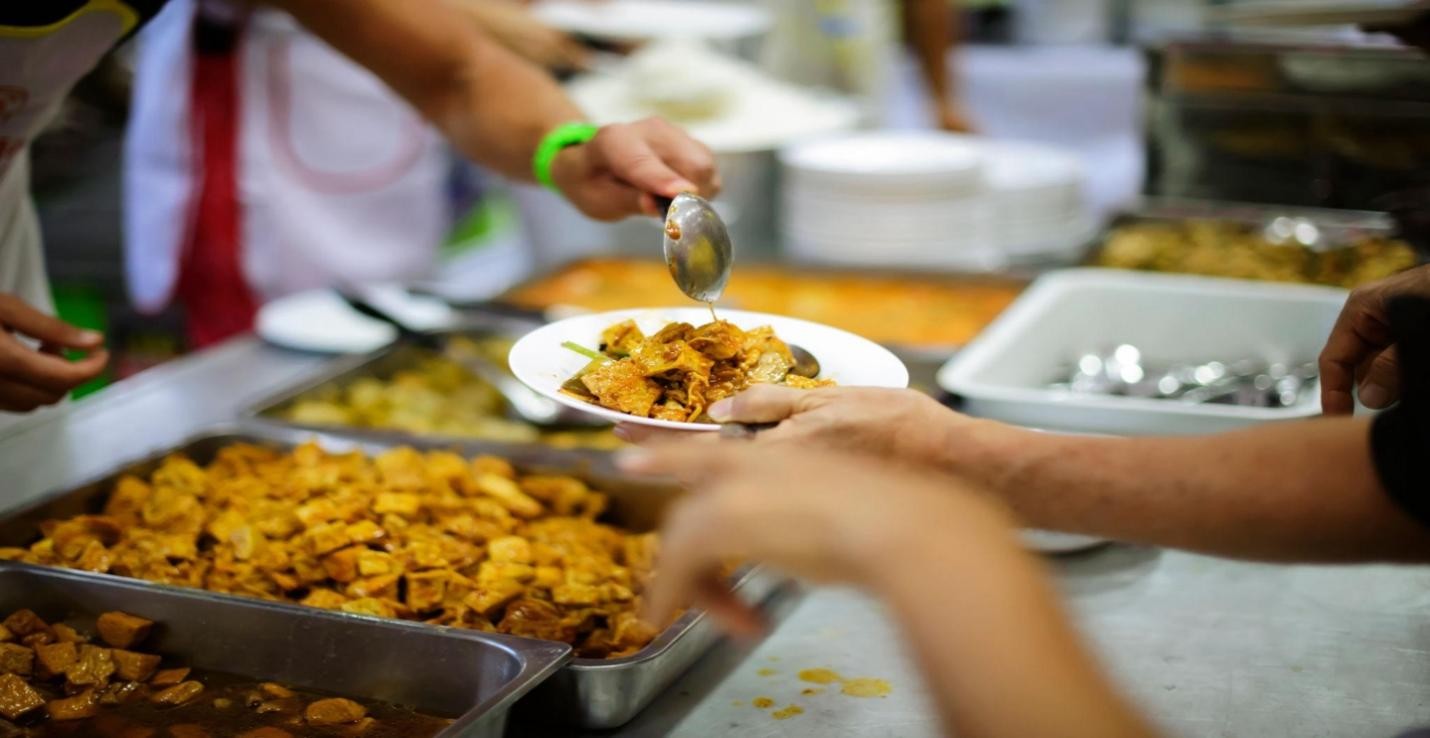
Only then do the awareness campaigns begin and they are city-specific, not generic national broadcasts. In Yasothon, a small northeastern Thai city with a strong cooperative culture, the messaging might focus on composting and farmer-led waste reduction. In Siem Reap, where the tourism sector dominates the economy, campaigns will target hotels and restaurants. In Phnom Penh, where the food rescue concept is newer, the emphasis shifts to connecting surplus food donors with community kitchens and shelters.
Five bilingual toolkits reduced from an earlier eight, because the team concluded that five well-tested, professionally designed guides are more useful than eight rushed ones will cover municipal organic-waste segregation, post-harvest handling, hotel and restaurant FLW reduction, community composting and biogas, and MRV data collection. Two additional topics, food rescue and circular business models, will be covered in concise fact sheets rather than full toolkits.
Training the Trainers, Then Getting Out of the Way
The capacity-building component Component 2 is where the project’s theory of change either holds or collapses. The design rests on a deliberate multiplier logic: APAARI trains 250 government and municipal officers as certified trainers through a ten-cohort, three-day Training of Trainers programme. Those certified trainers then deliver 50 cohorts of frontline practitioner training 1,250 waste collectors, market managers, hotel staff, and smallholder cooperative members using a modular two-day curriculum that APAARI develops but government officers deliver. The point is that when the project ends in December 2029, the training infrastructure stays behind.
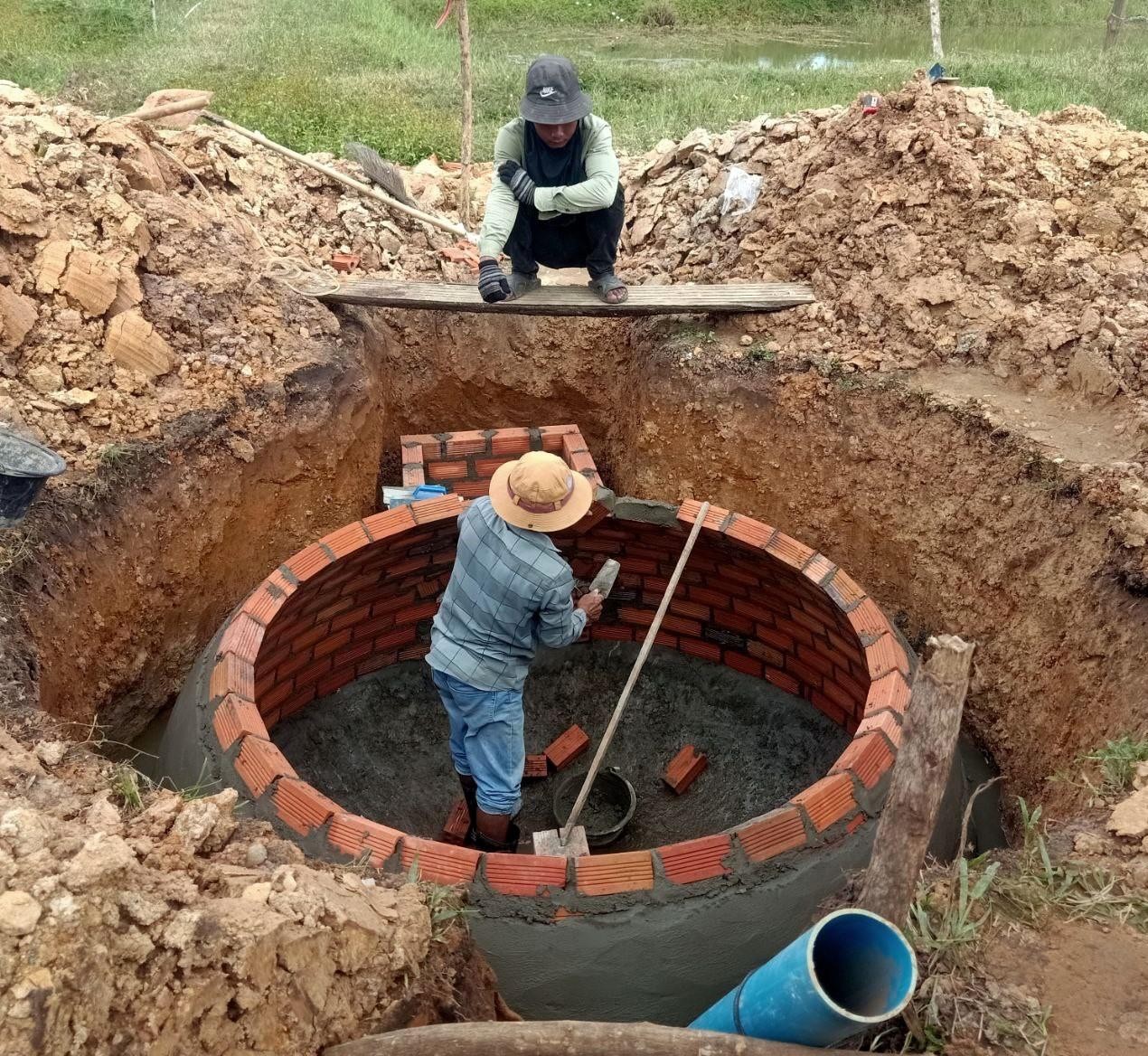
The eleven circular-economy pilots are where the money meets the ground. The project funds seven recycling sites three community composting facilities in peri-urban Cambodia (two in Siem Reap, one in Battambang), three small-scale biogas digesters at fresh markets and agro-processing nodes, and one Black Soldier Fly (BSF) bioconversion demonstration unit at an established Thai SME. There are also two digital traceability pilots at fresh markets in Yasothon and Battambang, a hotel menu-engineering programme covering 15 hotels in Bangkok and Siem Reap, and two city-level food rescue platforms in Bangkok and Phnom Penh.
An earlier version of the project design included ten recycling sites, 25 hotels, and 20 SMEs in the incubation programme. Reviewers pushed back and the team listened. Ten sites across three technologies in two countries was technically the riskiest part of the proposal. BSF technology, while promising, is still emerging in the region; five commercial-scale units with limited technical backstopping would have been a gamble. The revised design drops to seven recycling sites and treats the BSF unit as a learning pilot, not a commercial rollout. The hotel programme was reduced from 25 to 15 to ensure genuine depth. The SME incubation cohort was tightened from 20 to 12, with the requirement that every SME be directly linked to one of the project pilots — no unconnected “circular economy” startups just to hit a number.
Climate Credibility: Dashboards on Government Servers
Component 3 the MRV and GHG accounting workstream is what gives the project its climate credentials. Two GCF-compliant digital MRV dashboards will be built: one hosted on PCD infrastructure in Thailand, one on Ministry of Environment servers in Cambodia. The team was emphatic on one point: the dashboards must sit on government IT from day one, not on APAARI servers. The reasoning is institutional continuity. When the project closes, the dashboards stay exactly where they are inside the government systems that will use them for NDC and Biennial Transparency Report submissions.
Each of the eleven pilots will report monthly waste-diversion data. The formula is simple but rigorous: tonnes of FLW diverted multiplied by a locally calibrated emission factor equals tonnes of CO₂e avoided. An independent third-party verifier, selected by competitive tender, will conduct three annual verification rounds baseline at Month 12, mid-project at Month 24, and final at Month 36. All verification reports will be published openly on FLAW-CoP within 60 days.
The project’s target 250,000 to 400,000 tonnes of CO₂e mitigated over 36 months is ambitious but grounded. The lower bound is conservative, the upper bound reflects full pilot scale-up. Some reviewers flagged the range as potentially over-committed. The team’s response was practical: set the range, verify annually, and let the data speak.
Policy That Sticks
The final component covers policy anchoring and regional replication. Six structured policy dialogues three in each country follow a deliberate sequence: evidence review, stakeholder consultation, and formal endorsement. The goal is two updated national FLW strategies, formally adopted by PCD and Cambodia’s Ministry of Environment, by Month 30 of the project.
One of the most significant additions to the project design was a new activity for structured knowledge exchange with Lao PDR and Viet Nam. The original proposal mentioned ASEAN replication as a desired outcome but included no concrete activity to make it happen. Three cross-country learning missions will now bring AMUSE teams from Laos and Vietnam to visit Thai and Cambodian pilots, review FLAW-CoP resources, and produce country replication briefs documenting what is transferable and what needs adaptation. Regional spillover, the team concluded, requires deliberate programming — not passive knowledge diffusion.
What Makes This Different
The development sector is not short of food waste projects. What distinguishes this one, at least on paper, is a combination of design choices that reflect genuine lessons learned rather than the latest funding fashion.
First, every activity is traceable to a budget line, and every budget line is traceable to an activity. This sounds obvious, but GIZ reviewers consistently flag proposals where budget heads and activity descriptions do not align. The APAARI team built the budget bottom-up from daily rates and per-event unit costs benchmarked against GIZ, UNDP, and World Bank scales rather than top-down from an envelope figure.
Second, the project insists on government co-hosting, not just government attendance. Policy dialogues are co-convened with PCD and the Ministry of Environment. MRV dashboards sit on government servers. Toolkits are disseminated through government channels alongside FLAW-CoP. The aim is to make the project’s outputs indistinguishable from the government’s own work within two years of completion.
Third, the FLAW-CoP knowledge hub includes an Editorial Advisory Board three members from Thailand, Cambodia, and the wider region — established from Month 1 to govern content quality. Without such a board, the team observed, knowledge hubs tend to fill with low-quality material and go dormant within a year of project closure. The board is a small investment in long-term credibility.
The Road Ahead
As of May 2026, the concept note has been submitted to GIZ for appraisal. If approved, the project would begin in January 2027 and run through December 2029. The total indicative budget is EUR 3.37 million, of which EUR 2.92 million is requested from GIZ/BMZ and EUR 450,000 is mobilised as co-financing from APAARI, NARI member institutes, partner municipalities, and the private sector.
There is, of course, a gap between a concept note and a composting shed that actually processes market waste in Battambang. The team knows this. The pilot designs, the stakeholder maps, the MRV protocols all of it still needs to survive contact with reality. Monsoon floods can delay construction timelines. Municipal elections can change counterpart leadership overnight. Exchange rate movements can quietly erode a EUR-denominated budget.
Key Project Metrics
Indicator | Target |
Practitioners trained | 1,500+ |
Stakeholders reached | 40,000+ |
Social-media reach | 15 million+ |
Circular-economy pilot programmes | 11 |
Government-hosted MRV dashboards | 2 |
Estimated verified mitigation | 80,000–150,000 tCO₂e |
SMEs directly supported | 12 |
But the fundamentals are sound. The policy frameworks exist. The institutional partners are engaged. The technology is proven composting, biogas, and food rescue are not experimental concepts. What has been missing is the operational bridge between policy aspiration and municipal-level implementation. That is what this project aims to build.
“We have been talking about food waste in Asia-Pacific for over a decade. The data is there. The policies are improving. What we lack is the unglamorous, painstaking work of making things happen on the ground — training the waste collector, calibrating the emission factor, persuading the hotel manager to weigh kitchen scraps. That is the work this project is designed to do.” — Dr. Ravi Khetarpal(Ph.D), Executive Secretary, APAARI
“We often discuss food loss and waste in terms of tonnes, emissions, and policy targets. But real transformation happens at the human level — when municipalities learn to separate organic waste properly, when market vendors see value in what was once discarded, and when communities begin treating food waste as a resource rather than a burden. This initiative is about building those practical systems, partnerships, and local capacities that make circular economy transitions truly possible.”— Ms. Dipika Trivedi (Ph.D), Senior Technical and Administrative Associate & FLAW-CoP Lead Coordinator, APAARI
If the project delivers on its targets, the region will have more than composting sheds and dashboards to show for it. It will have a replicable template tested, verified, and documented for how two middle-income Southeast Asian countries can build a circular-economy approach to food waste that actually moves the needle on climate commitments. And it will have 1,500 trained practitioners who know how to keep the work going after the last international consultant has gone home.
That, in the end, may be worth more than any headline number.
References
[1] FAO (2019). The State of Food and Agriculture 2019: Moving Forward on Food Loss and Waste Reduction. Rome: Food and Agriculture Organization of the United Nations.
[2] FAO (2022). Global Food Loss Index. Technical Report. Rome: FAO.
[3] UNEP (2024). Food Waste Index Report 2024. Nairobi: United Nations Environment Programme.
[4] UNEP (2025). Food Waste Breakthrough Initiative. Launched at COP30, Belém. November 2025.
[5] World Bank (2023). Impact of Food Value Chain Inefficiencies on Smallholder Incomes in Developing Countries. Washington, DC.
[6] IPCC (2019). 2019 Refinement to the 2006 IPCC Guidelines for National Greenhouse Gas Inventories. Volume 5: Waste.
[7] Pollution Control Department (2023). Food Waste Roadmap: Thailand National Action Plan. Bangkok: PCD / Ministry of Natural Resources and Environment.
[8] Royal Government of Cambodia (2020). National Policy on Municipal Solid Waste Management 2020–2030. Phnom Penh.
[9] ASEAN Secretariat (2021). ASEAN Framework on Circular Economy 2021–2025. Jakarta.
[10] WRI (2016). Food Loss and Waste Accounting and Reporting Standard. Washington, DC: World Resources Institute.
[11] Government of Thailand (2021). Bio-Circular-Green Economy Model. Bangkok.
[12] APAARI / FLAW-CoP (2025). The Silent Famine: Addressing Asia-Pacific’s Hidden Emergency of Food Loss and Waste. Webinar proceedings. May 2025. Bangkok: APAARI.
Contact & Further Information
APAARI Secretariat, Bangkok, www.apaari.org
Dr. Ravi Khetarpal (Ph.D), Executive Secretary, ravi.khetarpal@apaari.org
Ms. Dipika Trivedi(Ph.D), FLAW-CoP Coordinator, d.trivedi@apaari.org
Mr. Manish Rai, Head of Operations, manish.rai@apaari.org
Ms. Darshika Senadheera Communication Officer, d.senadheera@apaari.org