Vang Vieng, Vientiane Province, Lao PDR | 4–6 November 2026
The Greater Mekong Subregion Cross-Border Livestock Health and Value Chains Improvement Project (CLHVCIP) convened the Inception Workshop for its Critical Skills Development and Policy Support consultancy package (CS02) from 4 to 6 November 2026 in Vang Vieng, Vientiane Province, Lao PDR. The workshop brought together key national and provincial stakeholders, technical institutions, development partners and project specialists to establish a shared understanding of the consultancy’s priorities, implementation approach and expected outcomes.
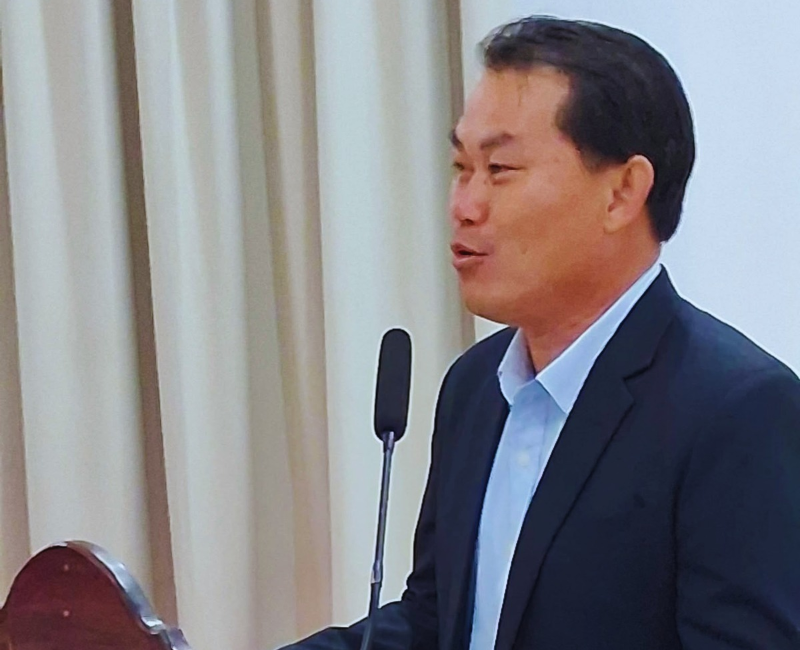
The meeting was chaired by Dr. Phanthavong Vongsamphan, Director General of the Department of Livestock and Fisheries (DLF), Ministry of Agriculture and Environment, Lao PDR. Dr. Thumrongsakd Phonbumrung, APAARI Representative and CS02 Team Leader, led the technical presentation, outlining the consultancy’s scope, proposed methodologies and implementation priorities.
The three-day workshop provided a platform to review the 36-month consultancy assignment, discuss technical priorities and methodologies, and examine the proposed Year 1 work plan and implementation arrangements. Participants included representatives from the Department of Livestock and Fisheries, the National Project Management Office (NPMO), provincial institutions, technical agencies, development partners, private-sector stakeholders and the CS02 consultancy team.
Assessing Institutional Capacity and Technical Needs
The discussions were informed by findings from field visits conducted in six target provinces and institutional assessments of four key facilities: the Veterinary Vaccine Production Center (VVPC), National Cattle Breeding Center (NCBC), National Animal Health Laboratory (NAHL) and Animal Feed Laboratory.
These assessments examined institutional capacities, infrastructure, equipment, human resources, operational systems and technical service requirements. The findings will help identify capacity gaps and establish practical interventions to strengthen livestock-related services and institutional performance.
Advancing Integrated Technical and Policy Priorities
The CS02 consultancy encompasses several interconnected technical workstreams aimed at improving livestock health, productivity, food safety and value chain performance. Key areas include:
- Animal health management and disease-control zones;
- Epidemiology, disease surveillance and monitoring;
- Laboratory strengthening and vaccine production;
- Livestock breeding and artificial insemination;
- Forage development and climate-smart livestock production;
- Food safety and risk-based meat inspection; and
- Livestock information and management systems.
In addition to these technical priorities, the consultancy integrates policy and institutional development, gender equality and social inclusion, One Health approaches, climate resilience, communication, capacity development, and monitoring, evaluation and learning.
Ensuring Sustainable Institutional Capacity
A central theme of the workshop was the importance of ensuring that technical investments are supported by effective operational arrangements and long-term institutional sustainability. This includes developing the necessary technical requirements, standard operating procedures, training packages, maintenance arrangements, supply systems and sustainable financing mechanisms.
The CS02 team will work closely with the responsible DLF institutions to translate identified needs into practical capacity-development interventions and policy support measures. Coordination with other project consultancy packages will also be essential to ensure consistency, complementarity and effective implementation across project components.
Reviewing the Year 1 Work Plan and Implementation Arrangements
The workshop also provided an opportunity to review the draft CS02 Inception Report and proposed Year 1 work plan. Discussions focused on identifying information gaps, implementation dependencies, activity sequencing, deliverables, milestones and areas requiring further institutional coordination.
The inputs and recommendations from participants will contribute to refining the consultancy’s implementation framework and ensuring that proposed activities respond to the needs and priorities of the relevant national and provincial institutions.
Strengthening Livestock Systems Through Collaboration
The inception workshop marks an important milestone in translating the objectives of CLHVCIP into coordinated technical interventions and strengthened institutional capacity. Through collaboration among government institutions, technical agencies, project partners and other stakeholders, the CS02 consultancy aims to contribute to improved livestock health services, safer livestock and meat value chains, stronger formal trade and more climate-resilient livestock-based livelihoods in Lao PDR.